Life Safety. Code Compliant.
End-to-end fire alarm design, installation, and monitoring to protect lives and ensure your building meets all local AHJ codes.
Not ready for a full quote? Talk to an engineer first.
ZEI engineers code-compliant fire alarm and life safety systems from initial CAD design through fire marshal acceptance and ongoing inspection. Addressable panels, voice evacuation, mass notification, and 24/7 UL-listed monitoring meet NFPA 72 and local AHJ requirements while protecting lives and property.
Technology Partners





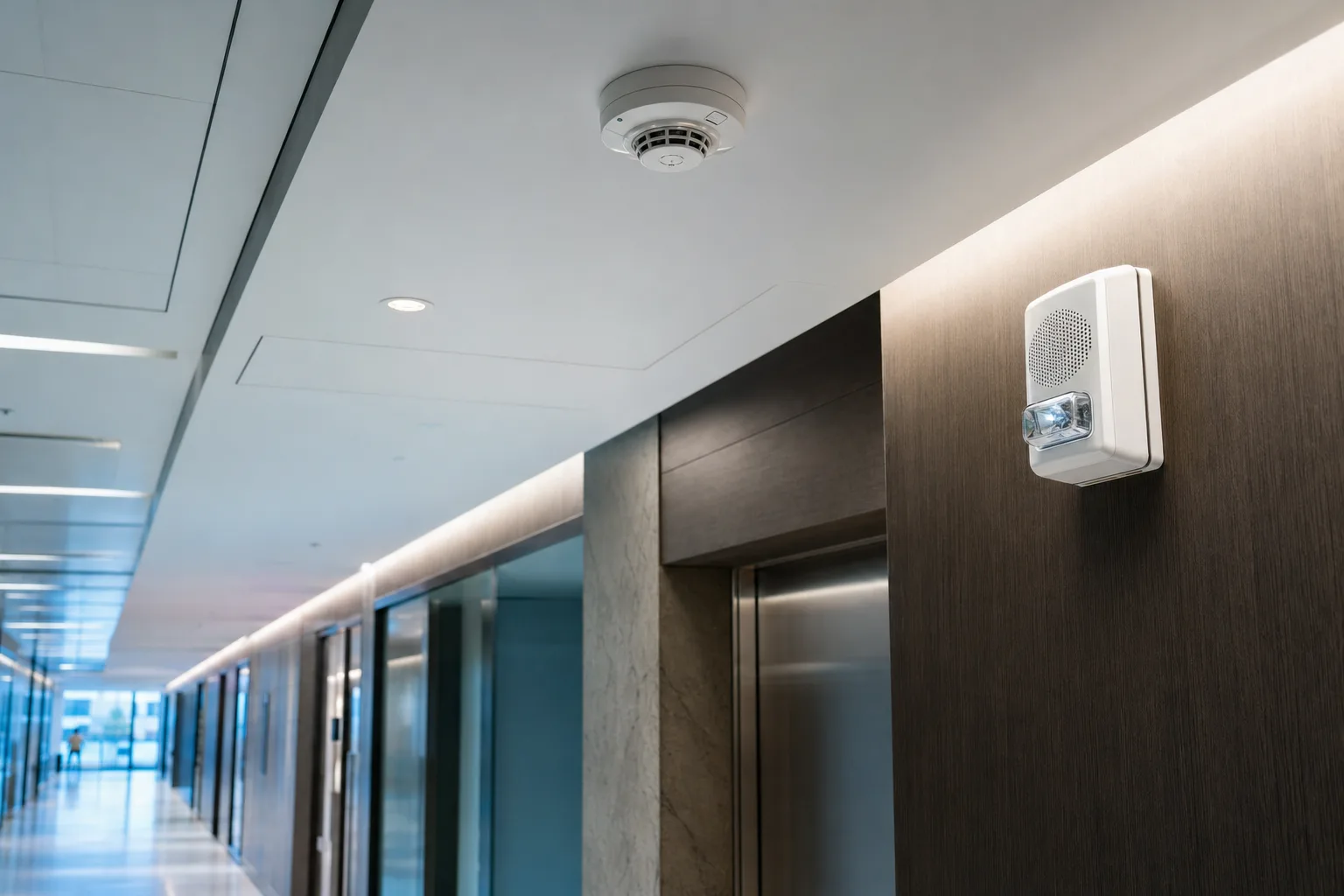
A representative environment where ZEI engineers, deploys, and supports fire alarm systems.
Where current systems fall short.
- Failed AHJ inspections delaying certificate of occupancy
- Aging conventional panels that cannot pinpoint the device in alarm
- Disconnected mass notification that cannot reach occupants quickly
- Inconsistent device testing leading to surprise failures during inspection
- Slow fire department dispatch from non-monitored or self-monitored systems
Comprehensive Fire Protection
From initial CAD design to final fire marshal inspection, we handle the entire lifecycle of your life safety system.
Code Compliance
Our NICET-certified engineers design systems that strictly adhere to NFPA 72, IBC, and local municipal fire codes.
Addressable Systems
Modern addressable panels tell first responders exactly which smoke detector or pull station was activated, saving critical time.
Voice Evacuation
Mass notification systems that provide clear, spoken instructions during an emergency, reducing panic and ensuring safe evacuation.
24/7 Fire Monitoring
Dedicated UL-listed fire monitoring centers dispatch the fire department immediately upon receiving a signal.
What gets installed.
A real deployment is more than the headline product. These are the components we typically specify and integrate.
Fire alarm control panel
Addressable FACP (Notifier, Silent Knight, FireLite, Edwards, Simplex) sized to the building's loop count and class.
Initiating devices
Smoke detectors (photoelectric / ionization / multi-criteria), heat detectors, manual pull stations, and duct detectors.
Notification appliances
Horn-strobes, speaker-strobes, and mini-horns sized for ADA-compliant audibility and visibility.
Voice evacuation
Networked amplifiers and speakers delivering pre-recorded and live voice messages by zone.
Monitoring communicator
IP + cellular dual-path communication to a UL 864 / NFPA-compliant central station.
Sprinkler & suppression interfaces
Waterflow, tamper, kitchen suppression, and pre-action interfaces wired into the FACP.
Survivable cabling
Fire-rated CI / 2-hour cable where required by NFPA 72 and local code.
Connects to what you already run.
Our fire alarm systems integrate with your existing identity, communication, and security systems for unified operations.
Active Directory
Identity & access
Slack / Teams
Connected communication
HR Platforms
People & permissions
VMS Systems
Video intelligence
Alarm Panels
Signals & response
Fire Systems
Life safety coordination
Building Mgmt
Facility orchestration
Custom API
Data without silos
How it gets built.
Every project follows the same engineering-led sequence — designed, documented, and delivered with no surprises.
- 01
Code review & permit design
NICET-certified plans drawn to NFPA 72 and submitted to the AHJ for permit.
- 02
Rough-in
Backboxes, conduit, and wiring installed during construction phase ahead of finishes.
- 03
Device install & termination
Initiating and notification devices installed, addressed, and labeled per drawings.
- 04
Programming & pre-test
Panel programmed; every device walk-tested for activation, communication, and zone reporting.
- 05
AHJ acceptance test
Fire marshal witnesses the system test; punch list resolved before sign-off.
- 06
Monitoring & training
Central station programmed; building staff trained on silence, reset, and trouble response.
What our engineers look for.
- NICET-certified design submitted to and approved by the AHJ before any device is installed.
- Spacing and placement of detectors and notification appliances follow NFPA 72 Chapter 17 and 18 explicitly.
- System segregation: dedicated circuits, dedicated battery backup, and no shared raceway with non-fire wiring.
- Annual inspection, testing, and maintenance per NFPA 72 Chapter 14 — documented and submitted to the AHJ.
- Mass notification requirements (UFC 4-021-01 for federal, ECS for higher-ed) layered into the design where applicable.
After the install.
Service tiers built around what your facility actually needs — not a one-size-fits-all SLA.
NFPA 72-compliant annual inspection, testing, and maintenance with submitted documentation.
Higher-frequency ITM for high-rise, healthcare, and other AHJ-mandated environments.
Priority emergency response, parts coverage, and panel programming changes as the building evolves.
System Types
Understanding the right fire alarm architecture for your building.
Addressable Systems
Intelligent systems for medium to large commercial buildings.
- Pinpoint device location
- Lower installation labor costs
- Advanced diagnostic capabilities
- Drift compensation for smoke detectors
- Highly scalable
Conventional Systems
Zone-based systems for smaller, simpler facilities.
- Lower upfront equipment cost
- Simple operation
- Zone-level identification
- Ideal for small retail or offices
- Proven, reliable technology
Where this system fits.
Education
Creating safe learning environments with integrated lockdown systems, vape detection, and campus-wide mass notification
Healthcare
Securing hospitals, clinics, and pharmacies while maintaining strict HIPAA compliance and ensuring a safe environment for patient care
Hospitality
Discreet, high-performance security and networking solutions that protect guests and staff without disrupting the hospitality experience
Condominiums
Elevating the resident experience while securing property perimeters, amenities, and common areas with smart building technology
Manufacturing
Industrial-grade security and process monitoring to protect intellectual property, ensure OSHA compliance, and minimize downtime
Logistics
Securing massive distribution centers and tracking fleet movement with long-range surveillance, yard management, and access control
Government
NDAA-compliant security infrastructure designed to protect municipal, state, and federal government facilities and personnel
Retail
Integrated loss prevention and retail analytics to protect your bottom line while gathering actionable intelligence on customer behavior
Airports
Comprehensive security and networking solutions designed to meet the rigorous compliance and operational demands of modern transportation hubs
Often deployed together.
Intrusion Alarm
ZEI engineers commercial intrusion detection systems that integrate with video surveillance and access control to verify threats before responders are dispatched
Video Surveillance
ZEI engineers commercial video surveillance systems built around modern IP cameras, edge AI analytics, and cloud or on-premise video management
Cloud Infrastructure
ZEI hosts and manages cloud infrastructure for physical security, video, and building systems on AWS, GCP, and Azure
From the engineering blog.
Background reading our team uses when designing fire alarm systems systems.
In-Building DAS: Meeting Fire Code Signal Strength Requirements
When a firefighter enters a burning building, their portable radio is their lifeline.
Firestopping Penetrations: The Requirement Nobody Gets Right
Of all the code requirements that affect low-voltage installations, firestopping is the one most consistently botched.
System Commissioning: The Phase That Separates Professionals from Installers
Installation is the easy part. Any crew can mount cameras, pull cable, and rack equipment.
Frequently asked.
Do you handle the AHJ permit and inspection?
Addressable or conventional — which is right?
Do you do annual inspections (ITM)?
Can fire alarm tie into our other security systems?
What about voice evacuation and mass notification?
Let's build your system.
Tell us about your facility. Our engineering team will design a system tailored to your security, connectivity, and automation requirements.
Request a Quote