See Everything. From Anywhere.
Enterprise-grade video security that combines high-definition optics with intelligent AI analytics to protect your facilities, assets, and people.
Not ready for a full quote? Talk to an engineer first.
ZEI engineers commercial video surveillance systems built around modern IP cameras, edge AI analytics, and cloud or on-premise video management. We design, install, program, and support deployments for facilities that need clear evidence, real-time alerts, and reliable retention — from single-site retail to multi-site enterprise.
Technology Partners






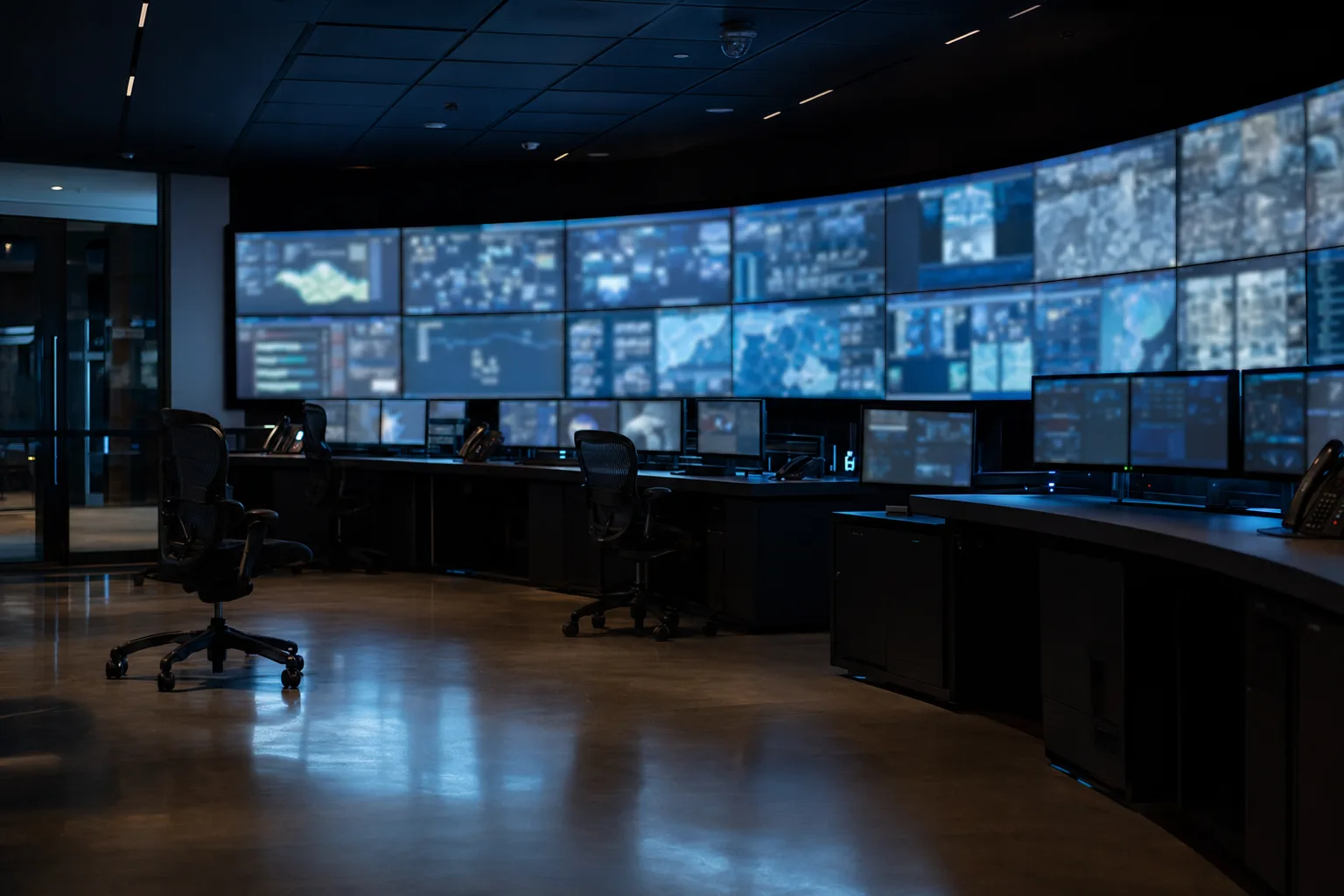
A representative environment where ZEI engineers, deploys, and supports video surveillance systems.
Where current systems fall short.
- Operators staring at dozens of monitors with no useful signal
- Footage that is unusable as evidence (low resolution, gaps, no metadata)
- Storage that runs out before the legally required retention window
- Cameras that cannot be searched by person, vehicle, or attribute
- Disconnected systems where video, access events, and alarms cannot be correlated
Intelligent Capabilities
Our video systems do more than just record. They actively analyze your environment to provide actionable intelligence.
Smart AI Analytics
Advanced edge-based analytics detect people, vehicles, and unusual activity in real-time, sending proactive alerts before incidents escalate.
Mobile Access
Securely access live feeds, review footage, and share clips directly from your smartphone or tablet, anywhere in the world.
Low-Light Performance
Next-generation sensors and IR illuminators provide crystal-clear, full-color footage even in near-total darkness.
Unified Ecosystem
Integrate your video surveillance seamlessly with access control, intrusion alarms, and intercoms for a single pane of glass.
What gets installed.
A real deployment is more than the headline product. These are the components we typically specify and integrate.
IP cameras
Fixed dome, bullet, multi-sensor, and PTZ cameras from NDAA-compliant manufacturers (Axis, Hanwha, Avigilon, Verkada).
Edge analytics
Onboard processors that run object classification, line-crossing, and behavioral analytics directly on the camera.
NVR / cloud VMS
Recording and management platform — Genetec, Milestone, Avigilon, Verkada, or Eagle Eye depending on architecture.
PoE+ switching
Managed switches with VLAN segmentation and per-port PoE budget for camera power and surveillance traffic isolation.
Structured cabling
BICSI-compliant Cat6/6A or fiber backbone with proper bend radius, dressing, and labeling.
Storage & retention
Right-sized RAID storage or cloud retention tiers based on bitrate, frame rate, and required retention days.
Mobile & web clients
Native iOS / Android clients and web consoles with role-based access for operators and investigators.
Power & UPS
Conditioned power and battery backup so cameras stay online during outages.
Connects to what you already run.
Our video surveillance systems integrate with your existing identity, communication, and security systems for unified operations.
Active Directory
Identity & access
Slack / Teams
Connected communication
HR Platforms
People & permissions
VMS Systems
Video intelligence
Alarm Panels
Signals & response
Fire Systems
Life safety coordination
Building Mgmt
Facility orchestration
Custom API
Data without silos
How it gets built.
Every project follows the same engineering-led sequence — designed, documented, and delivered with no surprises.
- 01
Site survey
On-site walkthrough capturing scene geometry, lighting, existing cabling paths, network capacity, and stakeholder requirements.
- 02
Design & PPF mapping
CAD camera placement with field-of-view overlays, Pixel-Per-Foot targets per scene, and bandwidth / storage calculations.
- 03
Cabling & infrastructure
Structured cabling, switch staging, VLANs, power, and UPS — installed cleanly and tested before camera deployment.
- 04
Camera install & commissioning
Cameras mounted, focused, framed, and IP-addressed with consistent naming and calibrated analytics zones.
- 05
VMS configuration
Recording schedules, retention tiers, motion / analytics rules, role-based user accounts, and alert routing.
- 06
Acceptance & training
Documented as-built drawings, scene-by-scene image quality validation, and operator + admin training.
What our engineers look for.
- Lens and resolution are matched to scene-by-scene Pixels-Per-Foot targets — not just by total megapixels.
- Camera placement honors lighting transitions, sun angles, and obstructions that degrade analytics accuracy.
- Bandwidth design accounts for both the LAN burst load and any WAN egress to the cloud, with H.265 / smart codecs where supported.
- Cybersecurity hardening is non-negotiable: dedicated VLAN, no default credentials, signed firmware, and disabled unused services.
- Retention is sized to the longest applicable requirement (insurance, HIPAA, NDAA, contractual) — not the manufacturer default.
After the install.
Service tiers built around what your facility actually needs — not a one-size-fits-all SLA.
Annual on-site preventive maintenance, firmware patching, and remote diagnostics during business hours.
Quarterly preventive visits, 24/7 remote monitoring of system health, and 4-hour priority response for critical failures.
Fully managed VMS administration, monthly camera-quality audits, hardware refresh planning, and dedicated technical account manager.
How the system fits together.
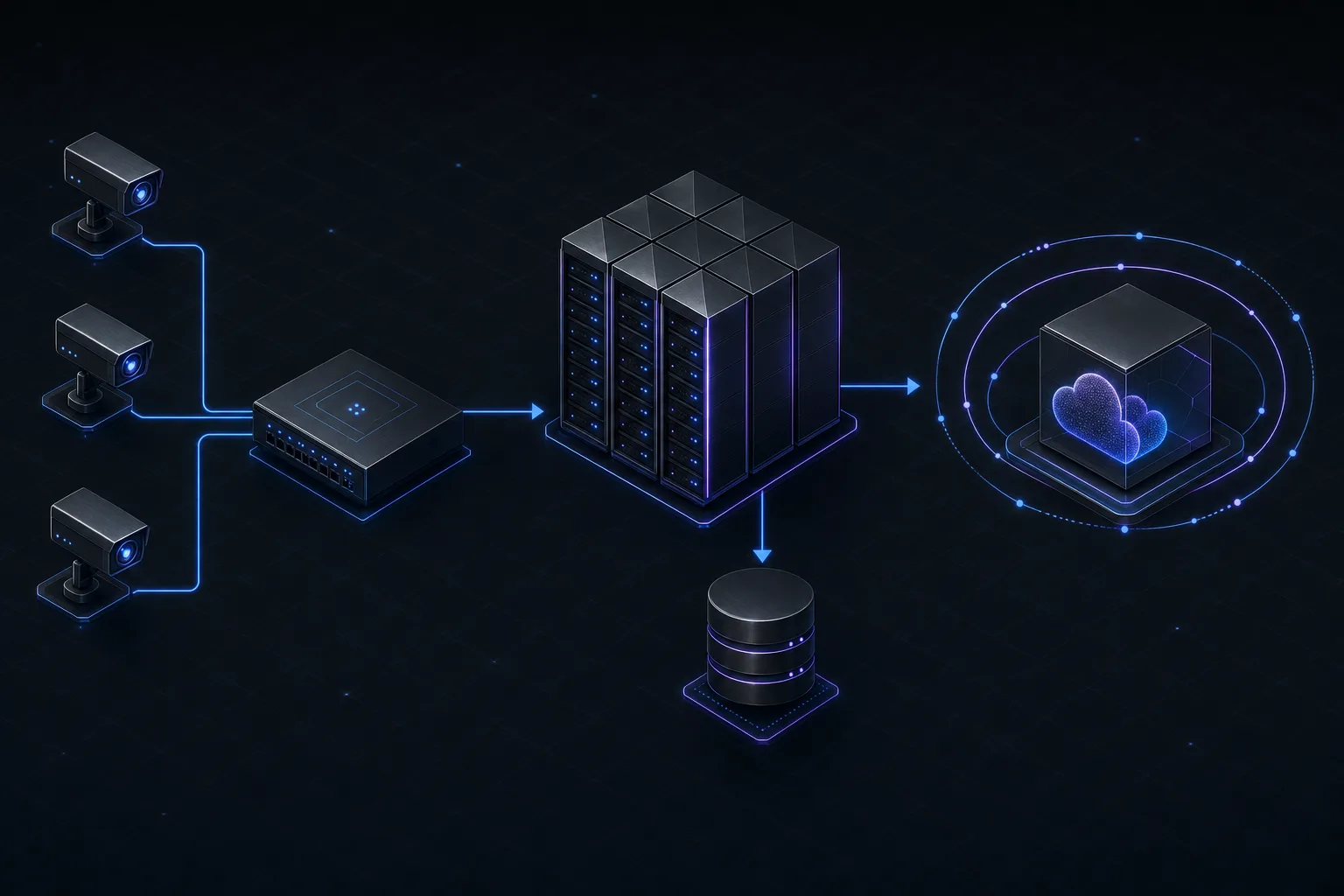
Architecture Comparison
Choose the deployment model that fits your security requirements and IT infrastructure.
Cloud-Native
Direct-to-cloud cameras with no on-premise servers required.
- Zero server maintenance
- Automatic firmware updates
- Infinite scalability
- Built-in remote access
- Predictable OPEX pricing
Hybrid / On-Premise
Local NVR/Server storage with cloud management capabilities.
- Maximum storage retention
- Minimal internet bandwidth usage
- Air-gapped network support
- Leverage existing camera hardware
- Capital expenditure (CAPEX) model
Where this system fits.
Government
NDAA-compliant security infrastructure designed to protect municipal, state, and federal government facilities and personnel
Utilities
NERC CIP compliant security solutions for power plants, substations, water treatment facilities, and critical energy infrastructure
Education
Creating safe learning environments with integrated lockdown systems, vape detection, and campus-wide mass notification
Healthcare
Securing hospitals, clinics, and pharmacies while maintaining strict HIPAA compliance and ensuring a safe environment for patient care
Logistics
Securing massive distribution centers and tracking fleet movement with long-range surveillance, yard management, and access control
Manufacturing
Industrial-grade security and process monitoring to protect intellectual property, ensure OSHA compliance, and minimize downtime
Retail
Integrated loss prevention and retail analytics to protect your bottom line while gathering actionable intelligence on customer behavior
Banking
Protecting financial assets, sensitive data, and personnel with integrated security systems that meet strict regulatory requirements
Hospitality
Discreet, high-performance security and networking solutions that protect guests and staff without disrupting the hospitality experience
Cannabis
Navigating complex state regulations with robust, compliant security infrastructure for cultivation, manufacturing, and retail dispensaries
Condominiums
Elevating the resident experience while securing property perimeters, amenities, and common areas with smart building technology
Airports
Comprehensive security and networking solutions designed to meet the rigorous compliance and operational demands of modern transportation hubs
Often deployed together.
Access Control
ZEI deploys cloud-managed and enterprise access control across single-door deployments and multi-site campuses
Physical AI
ZEI deploys physical AI — computer vision, behavioral analytics, and machine learning — that turns existing camera infrastructure into intelligent sensors
Intrusion Alarm
ZEI engineers commercial intrusion detection systems that integrate with video surveillance and access control to verify threats before responders are dispatched
Cloud Infrastructure
ZEI hosts and manages cloud infrastructure for physical security, video, and building systems on AWS, GCP, and Azure
From the engineering blog.
Background reading our team uses when designing video surveillance systems systems.
Why Megapixels Lie: The Truth About Camera Resolution and Forensic Value
Megapixel marketing has run away from the physics that matters. Pixel-on-target, sensor size, and lens quality decide whether footage is actually useful.
Designing the Network Backbone for a 500+ Camera Deployment
Designing a network for a handful of IP cameras is straightforward. Designing one for 500 or more is an entirely different discipline.
Hybrid Cloud Video Storage: Balancing Retention, Bandwidth, and Cost
The debate over where to store surveillance video has evolved beyond the binary choice of on-premises NVR versus cloud.
Frequently asked.
How many cameras does a typical commercial deployment need?
Should we go cloud, on-premise, or hybrid?
Are your cameras NDAA compliant?
How long can footage be retained?
Can existing cameras be integrated?
How does AI video analytics actually help operators?
Let's build your system.
Tell us about your facility. Our engineering team will design a system tailored to your security, connectivity, and automation requirements.
Request a Quote