Silence False Alarms. Stop Real Threats.
Commercial-grade intrusion detection paired with 24/7 professional monitoring to secure your assets when you are not there.
Not ready for a full quote? Talk to an engineer first.
ZEI engineers commercial intrusion detection systems that integrate with video surveillance and access control to verify threats before responders are dispatched. Encrypted wireless sensors, dual-path communication, and UL-listed central station monitoring keep alarm signals reliable and responses fast.
Technology Partners






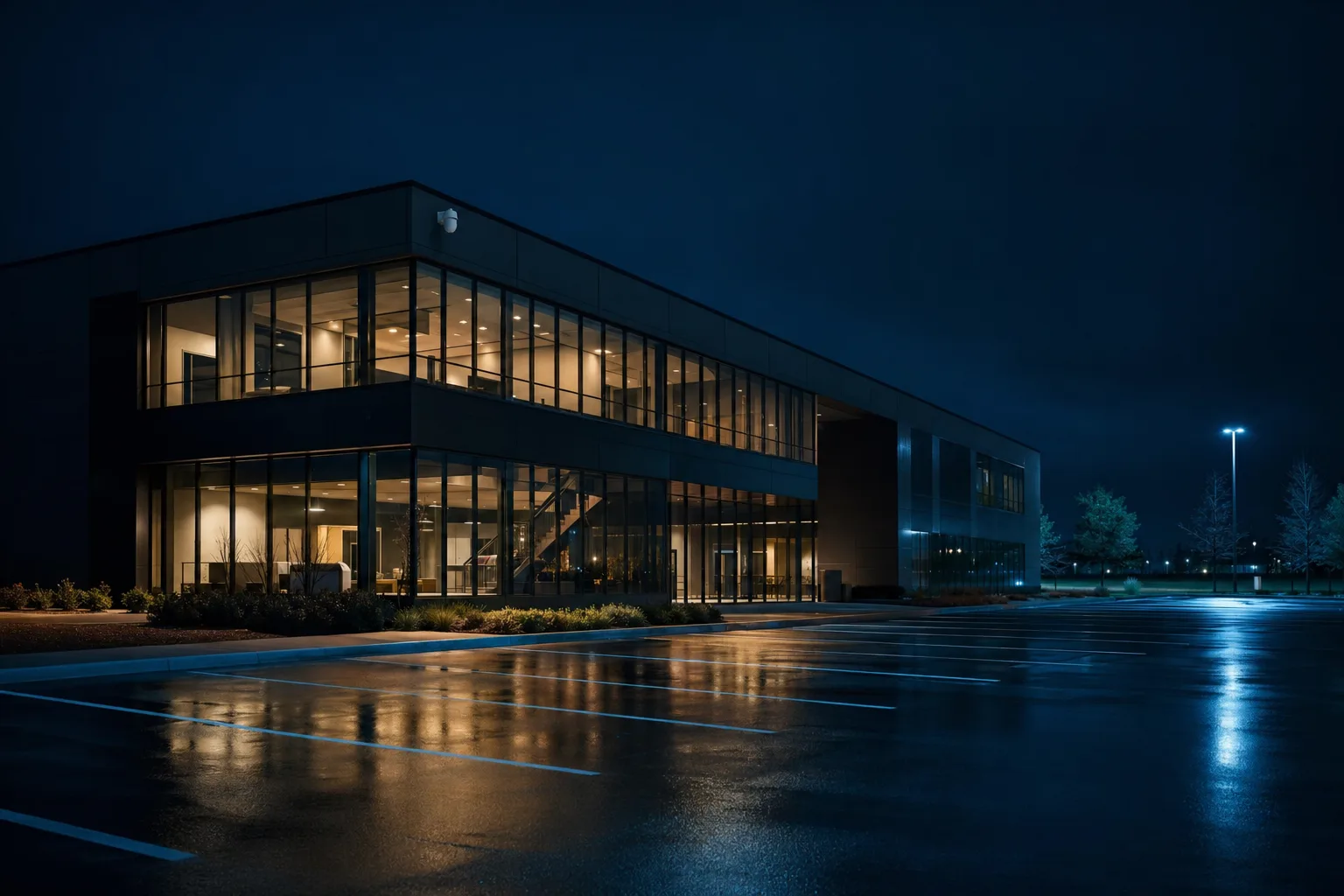
A representative environment where ZEI engineers, deploys, and supports intrusion alarm systems.
Where current systems fall short.
- False alarms causing fines and slow police response
- Sensors that can be jammed, bypassed, or disabled by intruders
- Alarm signals that fail when internet or power is cut
- Disconnected systems where alarms cannot pull video for verification
- Manual arm/disarm routines that get skipped or forgotten
How Monitored Defense Works
A multi-layered approach to detecting and verifying threats before dispatching authorities.
Video Verification
When an alarm triggers, our monitoring center instantly views the associated camera feed to verify the threat, ensuring priority police response.
Commercial Hardware
We use dual-tech motion sensors, seismic glass break detectors, and encrypted wireless contacts that cannot be easily bypassed or jammed.
Smart Automation
Automatically arm your system based on business hours, or disarm it when the first manager badges in at the front door.
Cellular Backup
Dual-path communication ensures your alarm signals reach the monitoring center even if your internet goes down or power is cut.
What gets installed.
A real deployment is more than the headline product. These are the components we typically specify and integrate.
Control panel
Commercial alarm panel (DSC, Bosch, Honeywell, DMP) with addressable zones and partition support.
Dual-tech motion sensors
PIR + microwave detection that ignores environmental triggers while flagging real intrusion.
Glass break & shock sensors
Acoustic and seismic sensors at vulnerable openings.
Door & window contacts
Encrypted wireless or hardwired contacts with tamper detection.
Cellular communicator
Dual-path (IP + LTE) communication so signals reach the central station even on outage.
Keypads & key fobs
User keypads with PIN + duress codes; mobile arming via app.
Central station monitoring
UL-listed monitoring with verified video escalation and priority dispatch.
Connects to what you already run.
Our intrusion alarm systems integrate with your existing identity, communication, and security systems for unified operations.
Active Directory
Identity & access
Slack / Teams
Connected communication
HR Platforms
People & permissions
VMS Systems
Video intelligence
Alarm Panels
Signals & response
Fire Systems
Life safety coordination
Building Mgmt
Facility orchestration
Custom API
Data without silos
How it gets built.
Every project follows the same engineering-led sequence — designed, documented, and delivered with no surprises.
- 01
Risk assessment
Walkthrough mapping zones, vulnerable openings, partitions, and authorized user groups.
- 02
Sensor design
Sensor type and placement chosen per zone; partition architecture defined for multi-tenant or multi-shift use.
- 03
Install & wiring
Hardwired backbone for critical zones, encrypted wireless for inaccessible runs; tamper-protected enclosure for the panel.
- 04
Programming
Zones, partitions, schedules, user codes, video links, and monitoring station accounts configured.
- 05
Walk test & central station verification
Every sensor walk-tested; signal verified at the monitoring center for both IP and cellular paths.
- 06
User training
Keypad operation, mobile app, duress code use, and false-alarm response protocol.
What our engineers look for.
- Sensor placement honors HVAC airflow, sun exposure, and pet immunity requirements to suppress false alarms.
- Cellular path uses an independent SIM and antenna, not the building's primary internet.
- Arm / disarm schedules are tied to access events (first-in, last-out) rather than relying on user discipline.
- Video verification is wired through the VMS so the central station sees the camera nearest the triggered zone.
- False-alarm ordinance compliance (verified-response cities require video) is designed in from day one.
After the install.
Service tiers built around what your facility actually needs — not a one-size-fits-all SLA.
Annual on-site inspection, battery replacement, signal-path testing, and remote diagnostics.
Semi-annual sensor walk-tests, 24/7 priority response, and quarterly false-alarm review.
Fully managed monitoring relationship, partition / schedule changes, and incident-report follow-up.
Monitoring Solutions
Choose the level of response your facility requires.
Standard Monitoring
Traditional signal-based monitoring and dispatch.
- 24/7 UL-Listed Central Station
- Automated SMS/Call alerts
- Standard police dispatch
- Daily communication tests
- Cost-effective protection
Proactive Video Monitoring
Live agents actively viewing cameras during alarm events.
- Live audio talk-down to intruders
- Priority police response
- Zero false alarm fines
- Virtual guard tours
- Detailed incident reports
Where this system fits.
Banking
Protecting financial assets, sensitive data, and personnel with integrated security systems that meet strict regulatory requirements
Cannabis
Navigating complex state regulations with robust, compliant security infrastructure for cultivation, manufacturing, and retail dispensaries
Retail
Integrated loss prevention and retail analytics to protect your bottom line while gathering actionable intelligence on customer behavior
Logistics
Securing massive distribution centers and tracking fleet movement with long-range surveillance, yard management, and access control
Manufacturing
Industrial-grade security and process monitoring to protect intellectual property, ensure OSHA compliance, and minimize downtime
Healthcare
Securing hospitals, clinics, and pharmacies while maintaining strict HIPAA compliance and ensuring a safe environment for patient care
Condominiums
Elevating the resident experience while securing property perimeters, amenities, and common areas with smart building technology
Construction
Rugged, rapidly deployable security and surveillance solutions to protect valuable equipment and monitor job site productivity
Often deployed together.
Video Surveillance
ZEI engineers commercial video surveillance systems built around modern IP cameras, edge AI analytics, and cloud or on-premise video management
Access Control
ZEI deploys cloud-managed and enterprise access control across single-door deployments and multi-site campuses
Fire Alarm
ZEI engineers code-compliant fire alarm and life safety systems from initial CAD design through fire marshal acceptance and ongoing inspection
From the engineering blog.
Background reading our team uses when designing intrusion alarm systems systems.
The 2025 Guide to NERC CIP-014 Physical Security Mandates
NERC CIP-014 requires transmission station owners to perform threat assessments and implement physical-security plans for designated critical substations.
Stopping Copper Theft: How Radar-Based Detection Cut Substation Losses by 98%
Copper theft at electric utility substations is not a nuisance crime. It is a safety emergency.
UPS Sizing and Battery Runtime Calculations for Security Infrastructure
A security system that loses power is no security system. This guide covers UPS sizing, runtime math, and battery selection for cameras and access control.
Frequently asked.
How does video verification reduce false alarms?
Can the system tie into our access control?
What if a thief cuts the phone line?
Are wireless sensors as secure as wired?
How does monitoring respond to a real alarm?
Let's build your system.
Tell us about your facility. Our engineering team will design a system tailored to your security, connectivity, and automation requirements.
Request a Quote